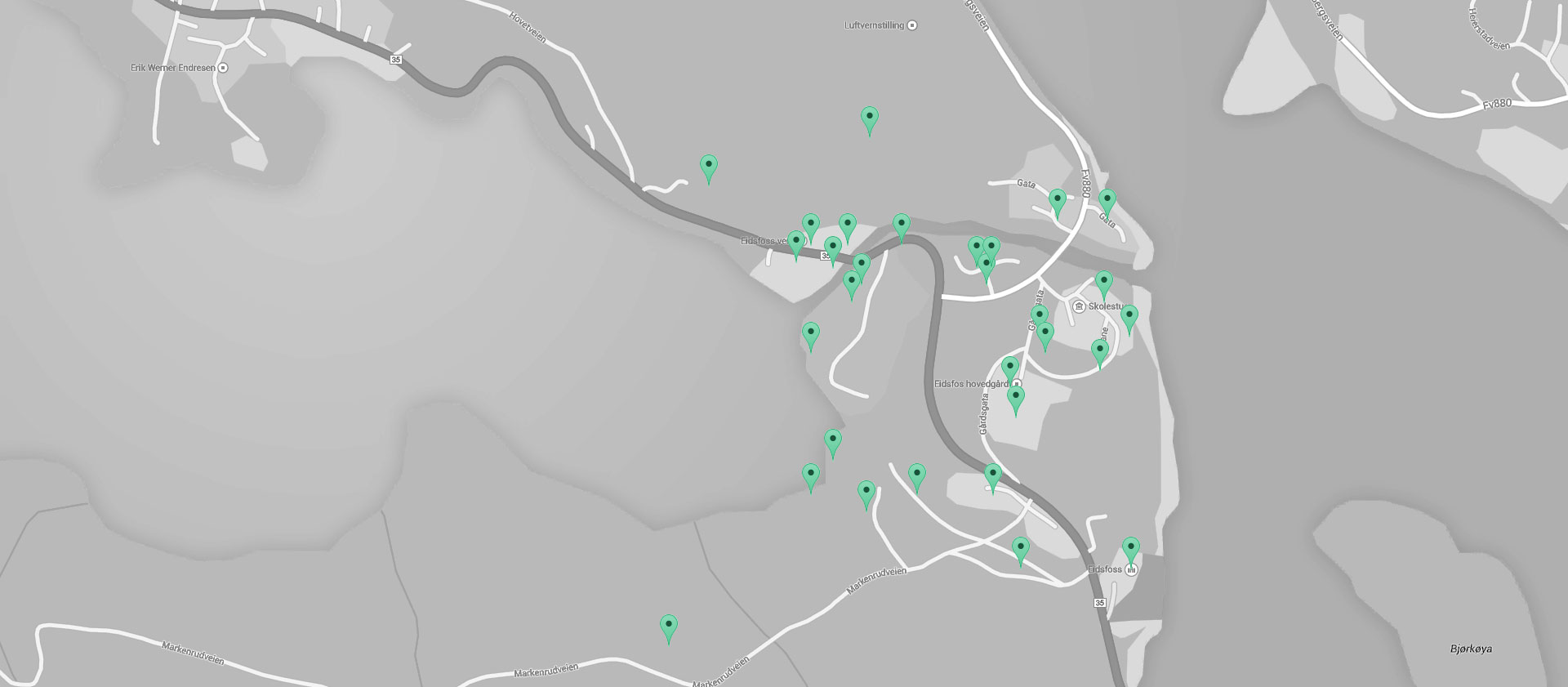



This place is called Lund, a name that points to bygone times, when lund was a common term for a park or garden grove. Here, among tall pine trees, lies the last remnant of the romantic landscaped park created around 1800 by Christine Marie and Peder von Cappelen.
A path from Eidsfos Manor led down to this semicircular raised area, held in place by a simple row of stones. From here, the owners of Eidsfoss Ironworks and their guests could enjoy the view across Lake Eikeren. They could then continue further down, past the small bathing pavilion that stood beside the now-vanished Hammerbekken stream, and all the way down to the water.
Lund was cultivated nature, where techniques borrowed from landscape painting were used to create picturesque, or visually beautiful, scenes to be experienced from paths and viewpoints. We can imagine Maja (Marie von Cappelen) and her friend Christiane Koren, who in the early 19th century “…wandered through… the delightful Lund, where every spot is so well used, where harmony and simplicity meet and flatter the eye everywhere, without ever tiring it with excess.”
In the 1950s, the music pavilion was built here, where workers gathered for dancing and outdoor entertainment. Various band and music festivals were held here. The Eidsfoss Day was first held here in 1958, and Music and Song Day became an annual event. Various performances are still held here today.
Below is a film made by Christian Erik Nordby
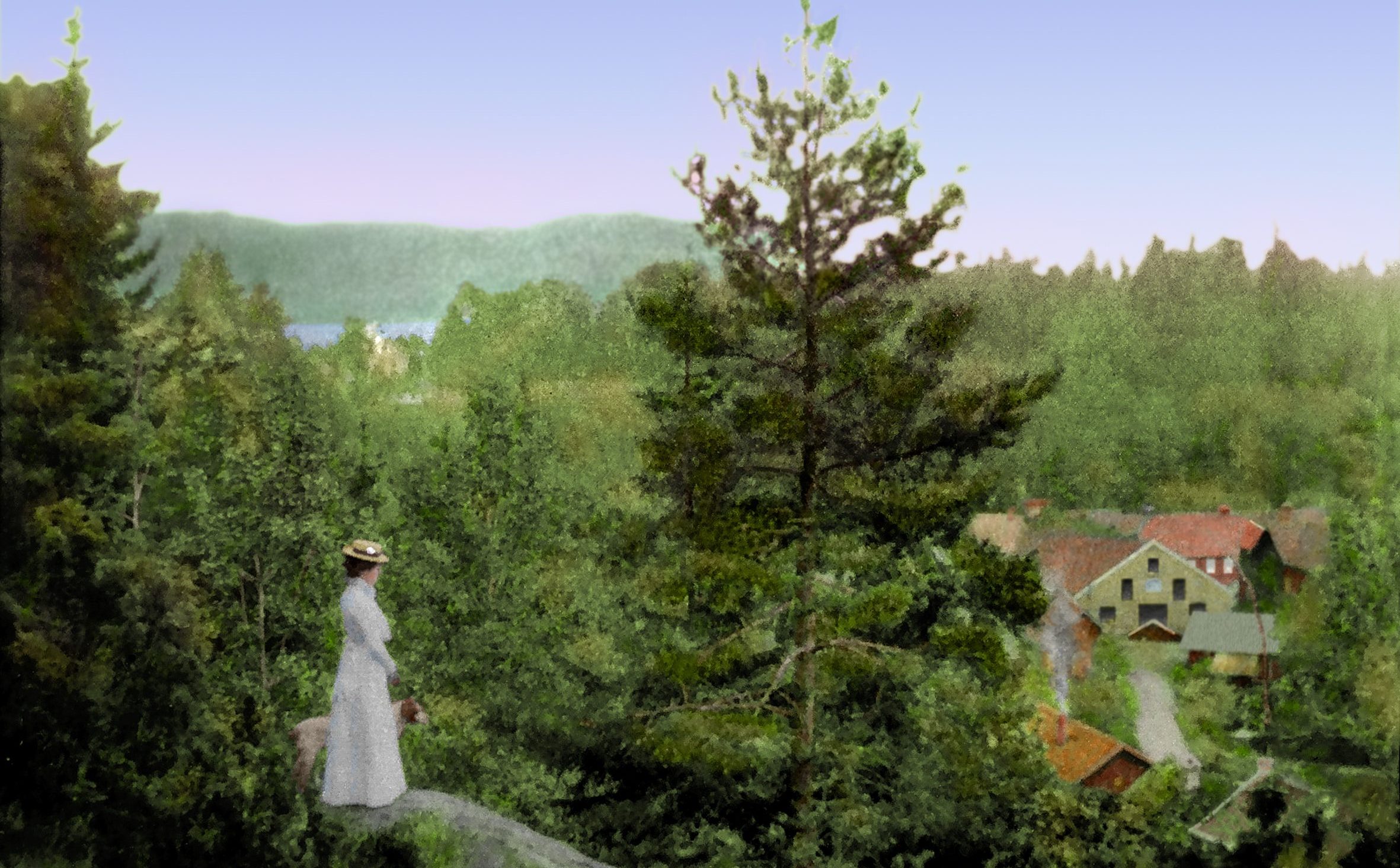
The photograph above is of Else Marie Backe and was taken during a Sunday walk to Sagkollen, which lies on the opposite side of Bråtagata from the ironworks. Nevertheless, it conveys something of the atmosphere that people were meant to enter into here at Lund.
The photograph was taken around 1900, at the end of an era when bourgeois culture idealised nature as a place for reflecting on the “great things” in life.
Hand colored by Bjørn Vangen.